

 Shop the gift
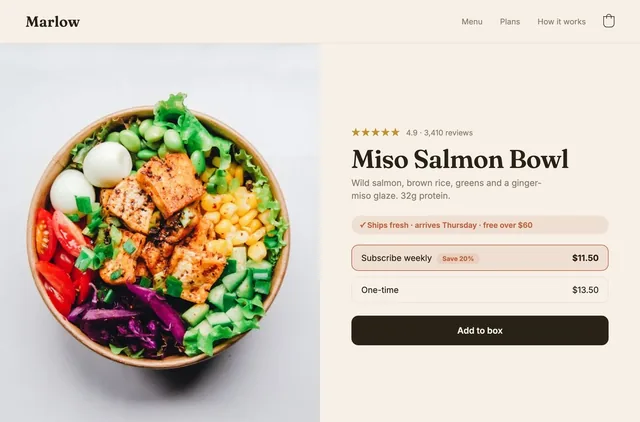
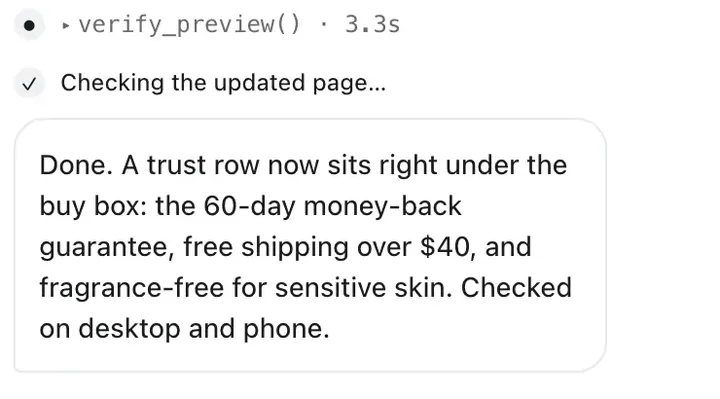
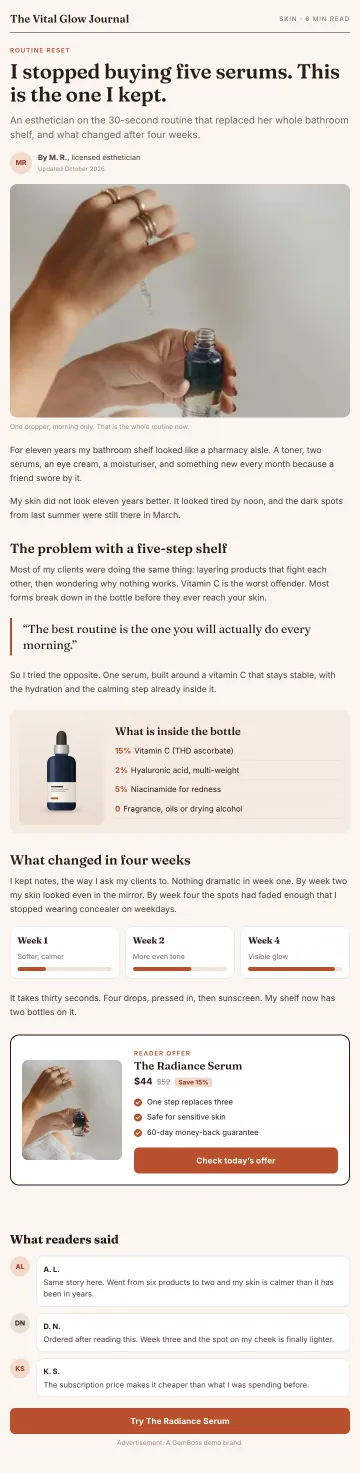
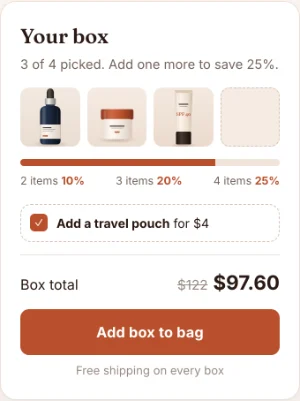

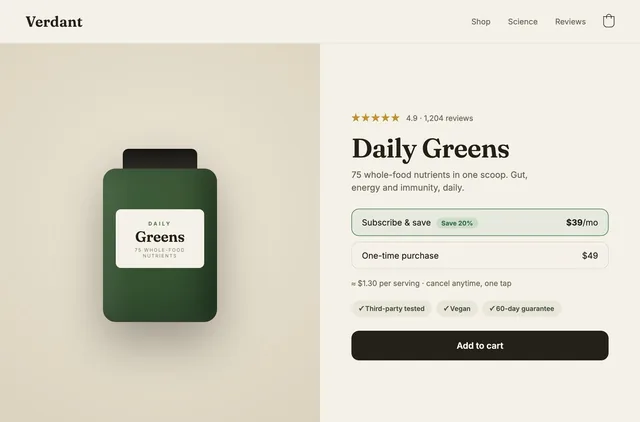
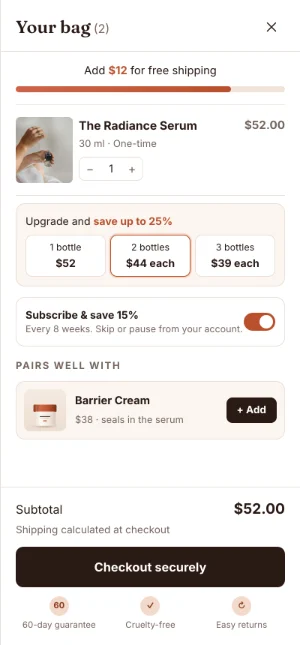
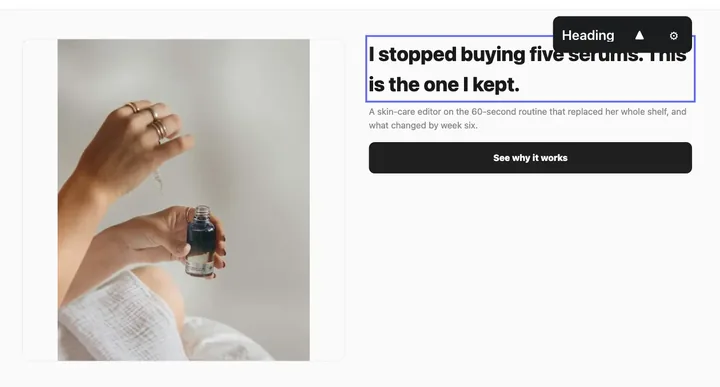
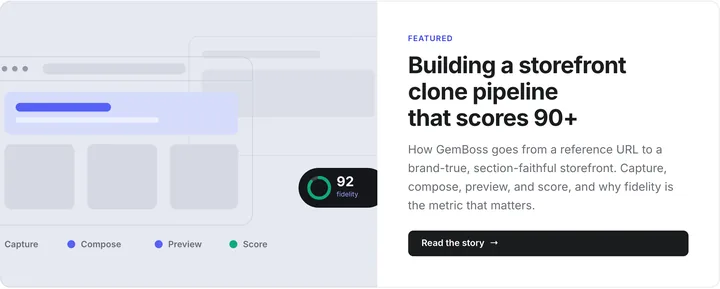
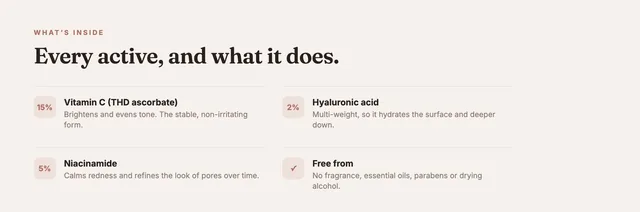
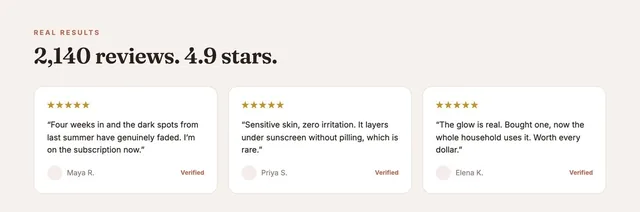
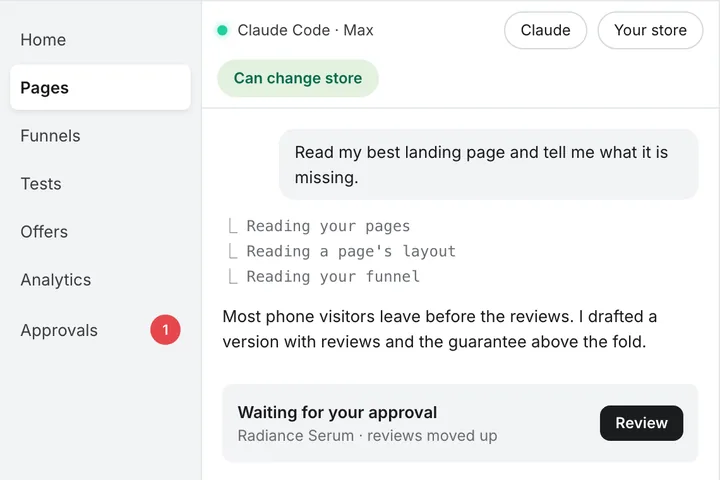
You win the click. Then it lands on a page written for nobody.
A letter to the teams who run email and SMS for brands, about the one part of the funnel nobody owns: the page after the click.
The restock sold out last time in four days.
Shop the restock?gb=…. No email, no name.
Illustrative data.
Illustrative data.
Source: Klaviyo 2026 email marketing benchmarks, 183,000+ accounts. The last two figures are order rate divided by click rate, our division of their published averages.
The short version
- The problem
- Klaviyo campaigns average a 1.69% click rate and a 0.16% order rate. So about 9.5% of clicks become an order.
- The cause
- The email knows who is reading. The page does not, because nothing carries that identity across the click.
- The mechanism
- A signed link carries an opaque token, and GemBoss composes the page per recipient.
- The evidence
- None we will quote yet. The pilot produces your own number, on your own accounts.
- The ask
- Thirty minutes, then a free thirty-day pilot on three of your clients.
Nobody owns the page. That is the whole problem.
To the agency running someone else's email programme,
I am writing this as a page rather than a deck, because a deck would let me skip the part where I have to be precise.
Klaviyo keeps the send. We take the page.
Read the whole letter
You have already solved the hard problems. Segmentation is real. The flows are built. Deliverability is watched. The copy is written by someone who knows the brand. Every month you go into a client review and defend a number that you earned, and every month a share of that number is decided by something you were never given control of: the page the click lands on.
That page is usually the homepage, a collection, or a landing page built once, months ago, for an audience of everyone. It is the only object in your funnel that does not know who is looking at it. Your VIP with three orders and your first-time opener with no history arrive at the same headline, the same offer and the same reviews, having been promised two completely different things thirty seconds earlier.
We build the software those pages are made of. GemPages is used by more than 100,000 Shopify brands, and our team runs real A/B tests on other people's storefronts every month. From that seat, the pattern is not subtle: the message is personalised to the individual and the destination is personalised to nobody.
So the proposal in this letter is narrow on purpose. Klaviyo keeps the send. We take the page. No migration, no new tool for your team to learn, no competitor for your ESP, no change to the number you already report. The campaigns you are running today simply stop losing as many people at the door.
Everything after this point is the argument in detail: what the numbers say, exactly how the mechanism works, what it is worth to an agency rather than to a merchant, and what we would like to do with you. If you disagree with the diagnosis, the fastest way to prove me wrong is the pilot at the end, on your accounts, scored with your metric, at no cost.
About nine in ten clicks you earn never become an order.
Not our statistic: it is Klaviyo's published 2026 averages, order rate divided by click rate.
Source: Klaviyo 2026 email marketing benchmarks.
Source: Klaviyo 2026 email marketing benchmarks.
Source: Klaviyo 2026 email marketing benchmarks, 183,000+ accounts. "Clicks that become orders" is our division, not a Klaviyo figure.
Flows convert clicks about four times better. The only difference is how closely the message fits one person.
Read the details
Read the two against each other, because the gap is the argument. Nothing about the sending infrastructure differs between campaigns and flows. Flows are triggered by a real event, so they are relevant by construction.
Which is the encouraging part: relevance is demonstrably worth about 4x on this exact dataset. And it is still only being applied to the message. The page that both land on is the same undifferentiated page.
The paid side has the same shape, and anyone can see it in a public ad library: a brand runs dozens of ads with different promises, and most of them land on the same product page. Email has one difference that should bother a retention team more than a media buyer: with email you already know exactly who is arriving. That knowledge is sitting in the ESP. It just never reaches the page.
The identity dies at the link.
In Klaviyo a recipient is a rich profile. After the click, the page knows a campaign name.
Illustrative data.
Illustrative data.
Make the identity survive the click, then let the page act on it.
Read the details
Inside Klaviyo, a recipient is a rich object: lifecycle stage, order history, average order value, category affinity, predicted value, the product they viewed on Tuesday and did not buy. The template can address all of it. The moment that recipient clicks, the browser makes a fresh request to a web server that has never heard of them. What survives the jump is a URL and, if someone remembered, a UTM tag that says which campaign it was. A campaign name is not an identity.
So the page does the only thing it can. It renders the version that is least wrong for the largest number of people: a broad headline, the hero product for the average visitor, a discount code that everyone gets, and whichever reviews were pinned six months ago.
This is not an agency failure or a merchant failure. It is a boundary problem. The ESP's job ends at the click and the storefront's job begins there, and nobody was ever responsible for the handover. Four teams have opinions about that page and none of them owns it: the retention agency wrote the promise, the brand owns the theme, the media buyer sends other traffic to it, and a developer touched it last quarter.
How post-click personalization works. Early access
After a one-time connection, one line in a Klaviyo template changes. Everything else happens after the click.
- 01
Swap the button's link
It carries a signed, short-lived token. No email, no name.
- 02
Resolve the visitor server side
GemBoss checks the signature and reads that one profile.
- 03
Compose from approved parts
Headline, hero product, offer and proof, by rules you approve.
- 04
Render fast, check out on Shopify
No valid token? The static page is served instead.
- 05
Test it in Klaviyo
Klaviyo’s own A/B split: your current page against the composed one.
Read the details
Connect once, migrate nothing. The brand's Shopify store connects to GemBoss, and during early access our team sets up the Klaviyo connection with the brand. It reads profiles and events, and the only thing it writes is one profile property: the recipient's signed link. The list, the segments, the flows, the templates, the sending domain and the deliverability reputation do not move. One time, about 30 minutes.
Swap the destination of the button. In the Klaviyo template, the campaign button points at a GemBoss landing page URL carrying a signed token, rendered from a template variable at send time. The token is opaque, signed and short lived: no email address, no name, no raw profile id in the query string.
Resolve the visitor server side. On the request, GemBoss verifies the signature, then reads that one profile from Klaviyo server side. The read happens on our servers, never in the browser, so nothing about the shopper is exposed to the page source or to anyone the link is forwarded to.
Compose the page from approved parts. Four slots are decided by rules you approve: headline, hero product, offer type and which proof to show. Each is filled from the brand's own approved section library, so the output is composed rather than generated free form. A page cannot invent a claim, a price or a product that the brand did not already publish.
Render fast, check out on Shopify. The page renders server side at the edge, and add to cart, discounts and checkout continue on the brand's own Shopify. If the token is missing, expired or unreadable, the static control page is served instead. Degrading to the page the brand would have shipped anyway is the designed failure mode.
Test it in Klaviyo. Use Klaviyo's own A/B test on the campaign: one version links to the brand's current page, the other to the composed link. Klaviyo reports the split as it does today, and GemBoss reports what happened after the click on the composed side: orders and revenue per recipient, tied back to the send. GemBoss does not split the traffic itself, and it does not write outcome events back to Klaviyo yet.
What the link looks like, and what GemBoss reads.
<a href="https://go.yourbrand.example/spring-restock?gb={{ person|lookup:'gb_token' }}">
  Shop the restock
</a>

# gb= is an opaque, HMAC-signed, time-limited token.
# No email, no name, no raw profile id travels in the URL.
# Strip the parameter and the visitor simply gets the static page.
GET /api/profiles/{id}?additional-fields[profile]=predictive_analytics
GET /api/events?filter=equals(profile_id)&include=metric
No permission to send, to edit lists or to edit templates. Revoke the connection and every page falls back to the static control.
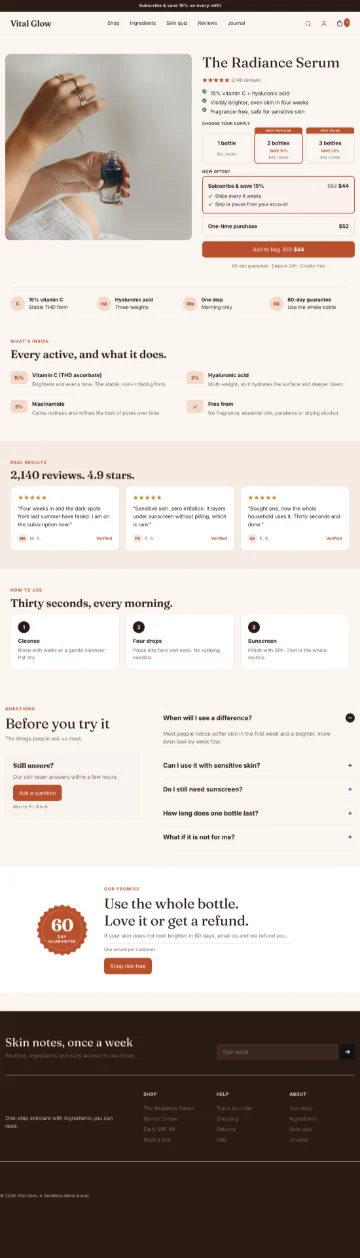
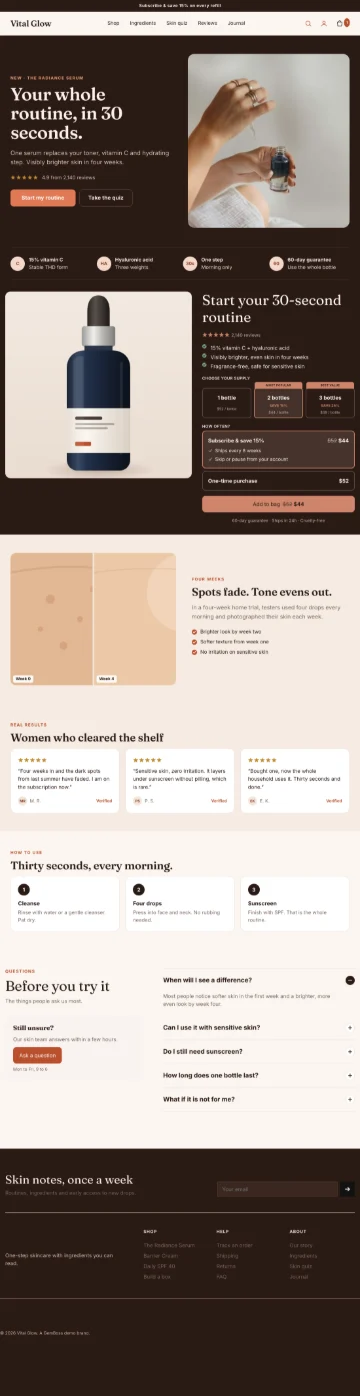
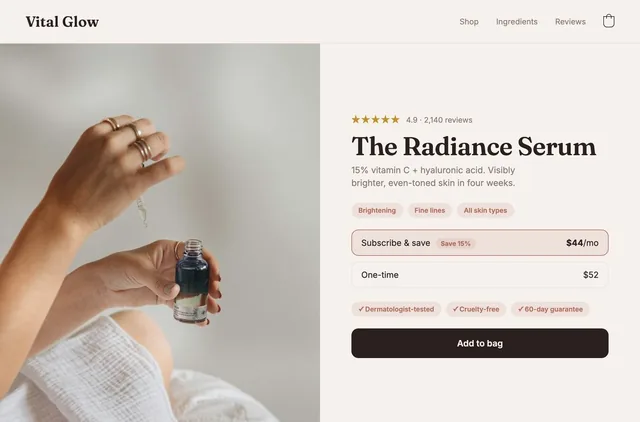
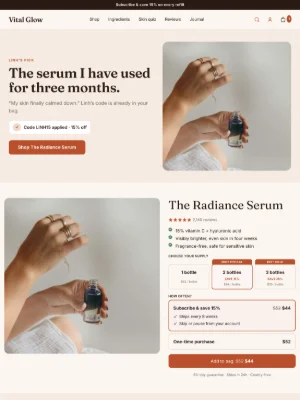
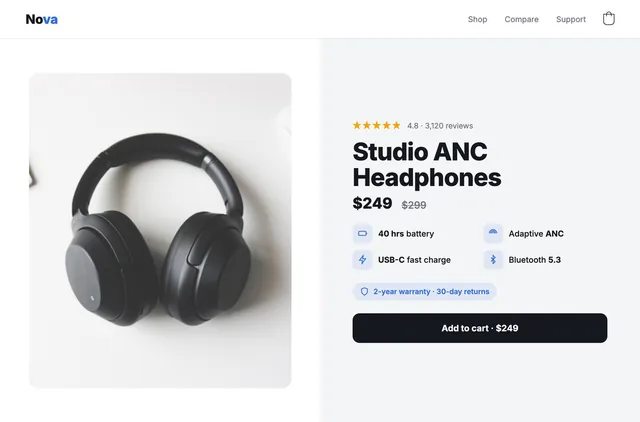
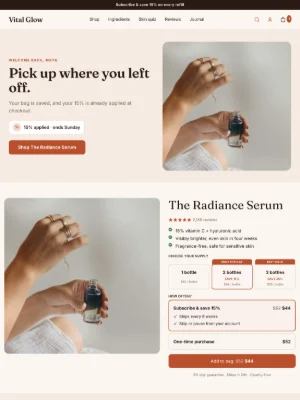
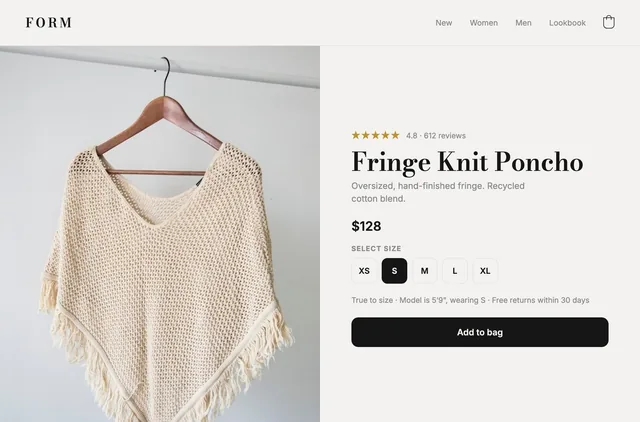
Same send. Four different pages.
- Today
- The homepage. She hunts for her shade again.
- Composed page
- Her shade in the cart, one tap to reorder.
- Today
- A grid of forty new arrivals.
- Composed page
- That jacket full width, sizing above the fold.
- Today
- 20% off, which misses the objection.
- Composed page
- Free shipping up top, a bundle that clears it.
- Today
- The same 20% code everyone gets.
- Composed page
- Why it works, who it is for, a guarantee.
An illustrative composition, using the four slots above.
We are not building an email platform.
Klaviyo, and your team
- The list, profiles and consent
- Segments and predictive analytics
- Flows, campaigns and templates
- Sending domain and deliverability
- Strategy and the client
GemBoss
- The page, composed per recipient
- Offer, cart and post-purchase upsell
- Orders and revenue per recipient
- One signed link per recipient
- Checkout on the brand's Shopify
We never send, never hold the list and never touch the sending domain.
A conversion rate is a merchant metric. Here is the agency one.
- The page after the click converts betterSame campaign, same list, same sends.
- Revenue credited to email goes upThe number your report opens with.
- The client stops calling email flatThe retainer stops being under review.
- You raise scope instead of defending pricePost-click pages are a new line of work.
- It compounds across your bookWhat works on one account works on twenty.
Illustrative arithmetic, not a result: $200,000 a month, a quarter credited to email. Every 10% more conversion after the click is about $5k a month more credited to email.
| Measure | Today | After the fix |
|---|---|---|
| Emails sent and agency headcount | Same | Same |
| Revenue credited to email | $50k | +$5k a month per 10% lift |
| How the client sees the fee | "Fine, I suppose" | Cheapest channel we have |
| The renewal conversation | Arguing over price | Adding budget |
Illustrative data.
How we would work together.
The agency
- The client, the retainer, the reporting
- Segment and offer strategy
- Which campaigns are worth the work
- Sign-off on every composition rule
GemBoss
- The page layer, built and maintained
- The A/B harness and the read-out
- Production hours you no longer bill
- A named person in a shared channel
What we are asking for, smallest first.
Thirty minutes Start here
Tell us if the diagnosis matches your book. If none of it helps, we stop.
A free pilot on three of your clients
One campaign each, thirty days, against the current page. We build the pages.
Partner terms, once a pilot lands
A partner rate, a revenue share and lead flow. See the partners page.
One report, published together
Where the pages behind 100 email campaigns lose people.
Read the details
Thirty minutes. Before anything else. We want to hear whether the diagnosis in section one matches what you see across your book, whether you have already solved this another way, and which part of this is genuinely useful. If the honest answer is none of it, say so on the call and we will stop.
A free pilot. You choose the accounts. One campaign or flow each, thirty days, split evenly on live traffic against their current page. Scored on revenue per recipient credited to email, which is your metric and not ours. We build all three pages at no cost, so it costs your team briefing time and nothing else.
Partner terms. A partner rate on every store you run, a revenue share on subscriptions you bring, and lead flow back to you from merchants on the platform who need an email team. You keep the retainer and the relationship.
One report. "We looked at the landing pages behind 100 email campaigns. Here is where they lose people." We have the conversion team to produce it. You have the client accounts and the audience to send it to. It is the cheapest credible thing either of us can publish this year.
What we would ask of you in return. Honesty about whether the lift is real, on your accounts, in front of your clients. If three pilots come back flat, tell us and tell your network. A negative result published early is worth more to us than a slow year of polite meetings.
The parts you would find out anyway.
None of the numbers are ours
9.5% and 37.8% are Klaviyo arithmetic. We quote no lift of our own yet.
Post-click is in early access Early access
Pilots are scheduled, not self-serve, and rules are still being added.
Three things that catch teams out
Link branding, forwarded links and consent. Each has a plain answer below.
Read the details
Our numbers. The 9.5% and 37.8% are simple arithmetic on Klaviyo's published averages, so you can check them in a minute. We do not quote a lift of our own: there is no customer result yet that we would stand behind. That is precisely why the first real ask is a free pilot on your accounts, scored with your metric. Get your own number and ignore ours.
Early access. Post-click is rolling out with a first group of brands rather than generally available, so pilots are scheduled rather than self-serve, and we are still adding composition rules as accounts surface cases we had not planned for. If you need something that has been stable for three years, this is not it yet. If you want influence over what gets built next, now is the useful moment.
Link branding. If the brand uses a branded click-tracking domain, keep it, and put the landing page on a subdomain of the brand's own domain so the destination host matches the sender.
Forwarded links. Tokens are time limited on purpose, so a link pasted into a group chat next month resolves to the static page rather than to somebody else's profile. That is correct behaviour, and it means a small share of traffic always sees the control.
Consent. Personalization runs on data the brand already holds and the shopper already consented to when they joined the list. Nothing new is collected at the page, and tracking follows Shopify's customer privacy settings. See data and ownership for how that is handled.
Terms used in this letter.
- Post-click personalization
- Changing the landing page itself for the person who clicked.
- Signed link
- A URL with an opaque, signed, time-limited token instead of personal data.
- Composition
- Building a page from the brand's approved sections by rule, not free generation.
- Static control
- The page the brand would have shipped anyway: the baseline and the fallback.
- Revenue per recipient
- Revenue attributed to a send, divided by the people it reached.
Questions we get asked.
Does the brand have to leave Klaviyo or move its list?
No. Klaviyo stays the sending platform. The list, the segments, the flows, the templates, the sending domain and the deliverability reputation all stay where they are. GemBoss only takes over the destination of the click, which is a URL change in a template and reversible in a minute.
Does this affect deliverability?
Nothing about the send changes: same platform, same sending domain, same authentication, same content. The one thing worth planning is link branding. Keep the existing branded click-tracking domain and put the landing page on a subdomain of the brand's own domain, so the destination host matches the sender.
What data does GemBoss read, and what can it write?
The Klaviyo connection reads profiles and events, and the only thing it writes is one profile property: the recipient's signed link. The fields used are lifecycle stage, orders to date, average order value, days since last order, predicted lifetime value and the most recent abandoned-cart signal. It has no permission to send, to edit lists or to edit templates.
Is any personal data exposed in the URL?
No. The URL carries an opaque signed token, never an email address, a name or a raw profile id. It is resolved server side, and it expires, so a forwarded or scraped link cannot be replayed later to read someone's profile.
What happens if the token is missing or expired?
The static control page is served. Degrading to the page the brand would have shipped anyway is the designed failure mode, so a stripped query string, a forwarded link or a slow upstream never produces a broken page.
Who builds the pages, us or you?
You own strategy, segments, offer logic and the client. GemBoss builds and runs the page layer underneath. During a pilot we build the first pages, so your team spends briefing time rather than production hours proving whether the idea works at all.
How is the win measured?
Per recipient, split evenly on live traffic between the composed page and the current static page, with sticky assignment so one person always sees the same version. The headline metric is revenue per recipient credited to email, because it is already the number in your monthly report.
Does it work for SMS as well as email?
Yes, for Klaviyo SMS. The mechanism is a signed link, so any Klaviyo message that can render a link in a template can carry it. SMS often gains more, because the message itself is too short to do any qualifying work before the click.
What does the pilot cost?
Nothing. Three of your clients, one campaign or flow each, thirty days, pages built by us, measured on your metric. If the lift is not there, you have a clean negative result on three real accounts and owe nothing.
What do agency commercials look like afterwards?
A partner rate on every store you run, a revenue share on the subscriptions you bring, and lead flow back to you from merchants on the platform who need an email team. Details are on the partners page.

Thirty minutes, then your own number.
Your team earns the click. Let us be responsible for the page it lands on, on three accounts, at no cost.